|
Mark Dreyfus says PM could have conflict of interest if Pacific Blue Capital triumphs, a claim the government called a ‘smear’ The government said a competitive tender process was being run for the visa system and that Malcolm Turnbull had no responsibility for it. Photograph: LuapVision/Getty Images/iStockphoto Labor fears a potential $1bn tender to privately process Australia’s visas could go to a company run by one of Malcolm Turnbull’s former employees.

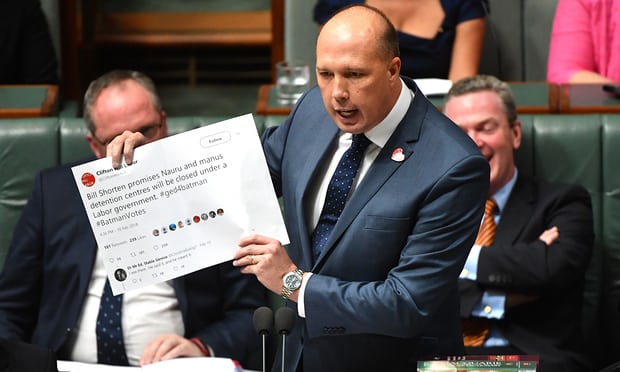
But the government said a competitive tender process was being run, and the prime minister had no responsibility for choosing who got the deal. Labor’s Mark Dreyfus asked if Turnbull had a conflict of interest in relation to reports Pacific Blue Capital was planning to bid for the visa processing privatisation. The firm is run by Turnbull’s former employee and friend Scott Briggs, who reportedly put together a consortium of companies including Qantas and NAB in a bid to win the visa contract. “Given it’s reported the prime minister launched Pacific Blue Capital and that Mr Briggs worked for the prime minister’s private investment firm, does the prime minister have a conflict of interest in relation to this $1bn government contract, and if so, how will he manage it?” Dreyfus asked in parliament on Tuesday. The government called it “a slur and a smear” of Turnbull. The leader of the House, Christopher Pyne, said: “The prime minister has no responsibility for public tenders in other ministers’ portfolios.” Home affairs minister Peter Dutton said the “normal probity arrangements” were in place for the tender process. “The prime minister, myself, we are not decision-makers in relation to this particular tender,” he told parliament. “They are dealt with by the appropriate officers within the respective departments.” A 2017 briefing by the former immigration and border protection department said Australia’s visa applications were set to rise to 13m a year in 2027, up from 9m in 2016. The department called for expressions of interest in designing, building and operating a “global digital platform” to run visa processing. Greens senator Nick McKim said privatisation would be “a corruption of the integrity of our visa system”. “We are deeply concerned about the conflicts of interests that come with giving such power to corporations, especially given Dutton’s enthusiasm for it to be sold part-and-parcel with commercial services like finance, travel and banking,” Senator McKim said in a statement. FOR FULL STORY PLEASE CLICK THE LINK BELOW: www.theguardian.com/australia-news/2018/feb/27/visa-processing-tender-turnbull-friend-labor-privatisation-pacific-blue-capital
0 Comments
ABUL RIZVI 20 FEBRUARY 2018 "Drastically reducing net migration would be neither easy nor wise, says a former senior official" How governments manage migration is a big deal. A perception of too many arrivals drove the Brexit result in Britain, helped define the Trump presidency, and fuelled the rising populist vote in Europe. Japan’s ageing population is driving its government to increase immigration — but ever so cautiously, recognising the likely backlash from its largely homogeneous population. And the same demographic forces have driven China to try to attract back part of its huge diaspora.
Yet, despite our long immigration tradition, Australia’s immigration debate is tortured and surprisingly poorly informed. Until very recently, this was not helped by the Turnbull government’s eerie silence on immigration levels and population policy. Immigration minister Peter Dutton’s tentative foray late last week should therefore be welcomed. Given the complexities, immigration ministers have an obligation to be accurate with the data and honest about the range of issues to be considered in significantly reducing the intake. Dutton was neither. He said that the Coalition had already “considerably” reduced the number of people entering Australia — by 100,000 compared with when Labor was in government. “It’s come back considerably,” he went on, “and if we have to bring it back further, if that’s what [is] required and that’s what’s in our country’s best interests… that is what we will do.” "The minister would know very well that governments can no longer simply turn migration on or off like a tap." If the minister was referring to the size of the migration and humanitarian programs, then his department’s website shows he was wrong — these programs have not been reduced by 100,000. Indeed, the Coalition has maintained the migration program at near record levels (around 190,000 per annum) for a number of years. Humanitarian numbers for 2016–17 are likely to have been among the highest in our history. He was more likely referring to the level of net migration: arrivals minus departures. But even here his statement is misleading. Net migration began rising rapidly during the latter years of the Howard government. Because it takes a number of years to adjust immigration levels, that momentum carried forward into the first years of the Rudd government. Net migration peaked in 2008–09 at 299,870 (with the increases driven mostly by overseas students) but fell significantly to 180,370 in 2010–11 and 229,410 in 2011–12. Since then, net migration has averaged around 206,000 per annum. More significantly, however, net migration reached 245,400 in 2016–17, an increase of over 50,000 on 2015–16. This was one of the largest single-year increases in Australia’s history. Once again, it was driven largely by a surge in overseas students. As the economy strengthens, net migration may rise further and — if current policy settings are maintained — it could well reach the record levels of 2008–09. Peter Dutton also said there may be a case for cutting immigration to reduce pressure on infrastructure. To have any real impact, though, the cut would need to be very large indeed, and would need to be sustained for many years. The minister would know very well that governments can no longer simply turn migration on or off like a tap. In theory, recent changes by the Turnbull government — replacing the 457 skilled temporary entry visa with a more restrictive visa, and increasing taxes on working holiday-makers — should reduce migration. Yet 2016–17 still saw an increase of 50,000, and we will possibly see even more in 2017–18 as the economy strengthens and universities seek to offset the impact of funding cuts with more revenue from overseas students. These increases are taking place while the formal migration and humanitarian programs remain largely unchanged. To understand why, we need to be aware that even when numbers in those programs are held constant, according to the department’s figures, the level of net migration reported by the Australian Bureau of Statistics can fluctuate significantly. The department simply counts the number of permanent resident visas issued (including to people already in Australia); the ABS counts both permanent and long-term arrivals and deducts departures. The government doesn’t cap most of the numbers that make up net migration, including the arrival and departure of Australian and NZ citizens, overseas students and skilled temporary entrants. It leaves these categories open for good reason — they are driven by the short-term needs of the labour market (though overall government policy also reflects lobbying and other pressures). In the eight years to 2008–09, for example, net migration surged from about 100,000 to 300,000 a year. The strength of the labour market and growing concerns about a declining fertility rate led to new policies designed to accelerate the arrival of skilled and semi-skilled workers and overseas students. FOR FULL STORY PLEASE CLICK THE LINK BELOW: insidestory.org.au/putting-the-numbers-back-into-the-immigration-debate/ Nick Evans | PerthNow February 20, 2018 5:34AM AUSTRALIA’S peak mining lobby is warning of serious skills shortages by the end of the decade if the Federal Government does not act urgently to encourage school leavers to take up engineering and geology degrees.
In a submission to a Senate inquiry into the future of the Australian workplace, the Minerals Council of Australia warned that enrolments in mining-focused programs had fallen to the lowest levels since 2000, and under-pressure universities would have to close specialist units if action was not taken. Enrolments in mining-focused courses — including geology and mine engineering — tend to lag the commodity cycle by about four years. Students drifted from the disciplines when the big miners neared the end of their massive infrastructure building programs in 2012-13 and cut jobs in the move to steady-state production, the MCA submission says. That trend was exacerbated by falling commodity prices and headlines dominated by job losses in the industry. “The number of students commencing mining programs across Australia in 2017 show enrolments continue a drastic downward trend to levels below those last seen in 2000,” the submission says. “There is a genuine threat of program closure because of critically low enrolment levels in programs, which are also ... high cost to universities to run.” Despite overall lower employment across the industry, the trend is likely to lead to critical shortages in technical disciplines by the end of the decade, mirroring the widespread skill shortages that drove up costs and held back construction of new mines in the boom years. “For mining engineering the moving average trend for university completions from 2017 to 2020 is expected to decline by 81 per cent,” the submission says. “In the same period, labour demand is expected to decline by only 13 per cent.” The MCA says that to ensure high-quality courses were available, the Government needed to provide baseline funding for mining schools through the down period, as well as help promote the disciplines to school leavers. “Safeguards should include stronger accountability mechanisms to ensure increased university fee revenue is devoted to teaching and student services,” it says. FOR FULL STORY PLEASE CLICK THE LINK BELOW: www.perthnow.com.au/business/mining/miners-warn-of-skill-shortage-ng-b88750262z.amp Home affairs minister says some Australia cities ‘overcrowded’ and migrants who are ‘going to be a burden’ should be rejecte Peter Dutton has said Australia must reduce its intake of migrants “where we believe it’s in our national interest”.
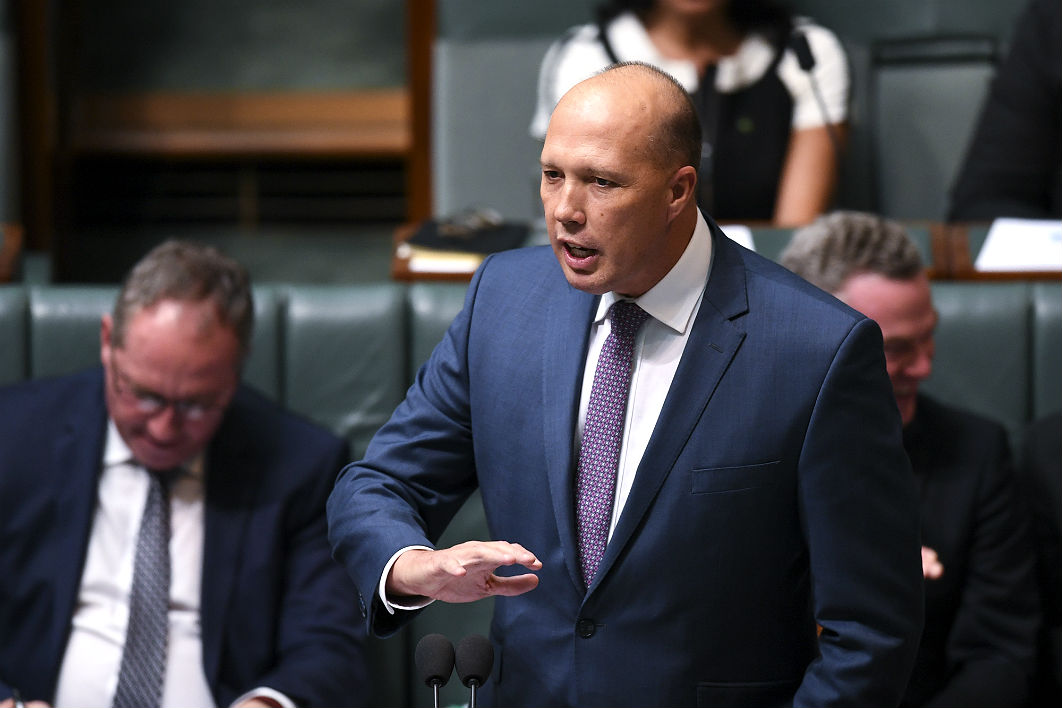
The home affairs minister told 2GB Radio on Thursday the Coalition had already “considerably” reduced the number of people entering Australia – by 100,000 on the levels when Labor was in government – and was not tied to the current level of migration. Dutton was responding to Jim Molan’s first Senate speech on Wednesday in which the new Liberal senator said he was concerned legal migration was “in excess of the capacities of our cities to absorb”. Since 2017 the former prime minister Tony Abbott has suggested a reduction as part of a “conservative manifesto” to win back Coalition voters, including those who intend to vote for One Nation, whose leader Pauline Hanson advocates stopping migration. Dutton said it was a “perfectly legitimate argument” that Australia’s cities were “overcrowded” including “gridlocked traffic in the mornings” and use of services like hospitals. “We have to try and encourage people out into regions, we have to reduce the numbers where we believe it’s in our national interest,” he said. “It’s come back considerably and if we have to bring it back further, if that’s what required and that’s what’s in our country’s best interests ... that is what we will do.” Dutton said some state governments had handled capital city infrastructure better than others so levels of overcrowding were “a different story as you go around the country”. The home affairs minister said the migration program should always “be operated in a way that it acts in our best interests” such as refusing to allow migrants who were “going to be a burden” in favour of people who “make a good contribution”. “But we do have problems where people are concentrating in and around Sydney, in and around other capital cities, including Melbourne. We need to try and disperse people out.” Dutton said some regions and sectors like abattoirs in regional areas needed a foreign or temporary workforce because “the local kids won’t do the work”. On Thursday, Molan, a former general and one of the architects of the Coalition’s Operation Sovereign Borders policy, said control of the borders and immigration “are important to me as they are to most Australians”. “We now effectively control our borders in a way that few now trust the opposition to do,” he said. “However, I am concerned that the level of legal migration ... is in excess of the capacities of our cities to absorb, both culturally or in terms of infrastructure. “We are approaching limits on this, if indeed we have already exceeded them. I don’t have the answers, but I certainly have the concerns.” Molan did not express contrition for sharing videos from anti-Muslim group Britain First, but rather thanked the prime minister, Malcolm Turnbull, for backing him over the controversy. Molan has previously suggested he shared the videos to spark conversation about law and order rather than to suggest Muslims are responsible for violence. At a press conference on Thursday the jobs minister, Michaelia Cash, praised Molan as an “outstanding individual” who had helped the Coalition stop people smuggling boats. Asked about his comments on migration, Cash distanced herself by noting that Liberals are “able to express an opinion”. “It doesn’t actually mean the government is going to agree with your opinion,” she said. FOR FULL STORY PLEASE CLICK THE LINK BELOW: amp.theguardian.com/australia-news/2018/feb/15/peter-dutton-calls-for-migration-cut-we-have-to-reduce-the-numbers Supporters rally in Melbourne calling for John Falzon, right, to remain in Australia. Source: Supplied A convicted drug trafficker being held on Christmas Island faces deportation to his native Malta after losing a High Court bid to have his visa reinstated. UpdatedUpdated 20 hours ago By Greg Dyett A convicted drug trafficker, who migrated to Australia as a toddler in 1956, could be deported to Malta after losing a High Court appeal to have his visa reinstated. Sixty-six-year-old John Falzon migrated with his parents and never became an Australian citizen. In 2008, he pleaded guilty to cannabis trafficking and served eight years in jail. At the end of his sentence, his visa was cancelled on character grounds and he was placed in immigration detention. He is currently being held on Christmas Island. Falzon argued in the High Court that he'd served his time for his crime and ejecting him from Australia was an attempt to punish him further. ut in a unanimous decision the High Court dismissed that argument. The court found the immigration minister must cancel a visa held by a person if the minister was satisfied that they failed the character test because of a substantial criminal record. His application was dismissed with costs. Falzon's family in Australia includes two sisters, four brothers, four adult children and ten grandchildren. One of his sisters, Ann Falzon told SBS News the family is devastated. "All comes down to he's got to go back to Malta. He came here when he was three-years-old, like he doesn't even know anybody over there. They're just going to dump him in Malta and leave him and what's he going to do, he's got no money, he's got nobody over there, we're all here," she said. She said her brother has paid a high price for his drug trafficking. "We’ve been waiting already how many years and we just get let down after let down. All this is over his marijuana. He grew a bit of marijuana and they locked him up for 8 years and now he’s been in detention for three years. He just wanted to come home.” FOR FULL STORY PLEASE CLICK THE LINK BELOW: www.sbs.com.au/news/man-loses-visa-fight-faces-deportation-to-malta-61-years-after-arriving-in-australia VICTORIA LAURIE,TIM DODD,JOHN ROSS THE AUSTRALIAN 12:00AM January 31, 201 The $30 billion international education industry has warned that Western Australia is losing large numbers of
valuable overseas students to other states following last year’s decision by the incoming McGowan Labor government to slash migration incentives. Nearly all WA universities are expected to suffer a fall in the number of international students commencing study this year, in sharp contrast to the education export boom in other states. International education is Australia’s third largest export industry and revenue is growing at 20 per cent a year. After winning office in March last year, Premier Mark McGowan’s government gave in to a union push to cut skilled migration by ending the migra tion points advantage for immigrants wanting to settle in WA under the Regional Sponsored Migration Scheme. Education agents are now recommending to migrationfocused students that they study in South Australia, the Northern Territory or Tasmania, where they can still get the fivepoint bonus. “SA, the NT and Tasmania all celebrated when the WA government withdrew the regional migration points,” said Phil Honey wood, chief executive of the International Education Association of Australia. “They saw advantage coming to their state to the detriment of WA.” Robynne Walsh, principal of Perth English language school Phoenix Academy, said the government decision had severe consequences. “It is a concern to many in the sector and it’s been devastating because Adelaide is still on the list,” she said. The only WA university expected to increase the number of its commencing international students this year is the Univer sity of Western Australia, which has opened up more places to Chinese students that were limited in the past. Even before the full impact of the government’s skilled migra tion decision was felt, the number of new international students choosing to study in WA was declining. According to the latest Department of Education and Training figures, which capture international enrolments to November 2017, WA was the only jurisdiction where overseas commencements declined last year. The number of new students in the state fell by 7 per cent, compared with the first 11 months of 2016, despite growth of 11 per cent across Australia. Commencements rose by 11 per cent in NSW and Queensland, 15 per cent in Victoria, 20 per cent in the ACT and 38 per cent in Tasmania. South Australia and the Northern Territory experienced more modest growth of 5 per cent and 3 per cent respectively. Mr McGowan rejected the charge that his clampdown on skilled migration was to blame for the international student slump in his state. “Perth is excluded from the Regional Sponsored Migration Scheme, as are other major cities such as Brisbane, Sydney and Melbourne — yet Queensland, New South Wales and Victoria remain wildly popular destinations for international students,” Mr McGowan said. “This suggests lower international student numbers in WA can’t simply be linked to Perth’s exclusion from the scheme.” The Premier blamed the previous Liberal government’s failure to develop an international education strategy. “While disappointing, this means there is plenty of scope for improvement,” he said. Mr McGowan said his government had allocated $2 million over five years to boost WA’s market share, and his first official dele gation to China last year was aimed at raising tourist and inbound student numbers. Queensland has allocated $37m over four years to international student marketing, while Victoria has set aside $35m. Victoria also has 12 fulltime education counsellors recruiting for the state across Asia, while WA has none. FOR FULL STORY PLEASE VISIT: www.theaustralian.com.au/higher-education/overseas-students-wa-faces-shortfall-after-labors-cuts-to-migration-incentives/news-story/75771ce3364faea0%E2%80%A6?nk=c14b5dae96b7b632d5e1ec3fc27573ca-1517454986 |
Archives
July 2025
Author
Andrew EP McAuley Categories
All
|
RSS Feed