|
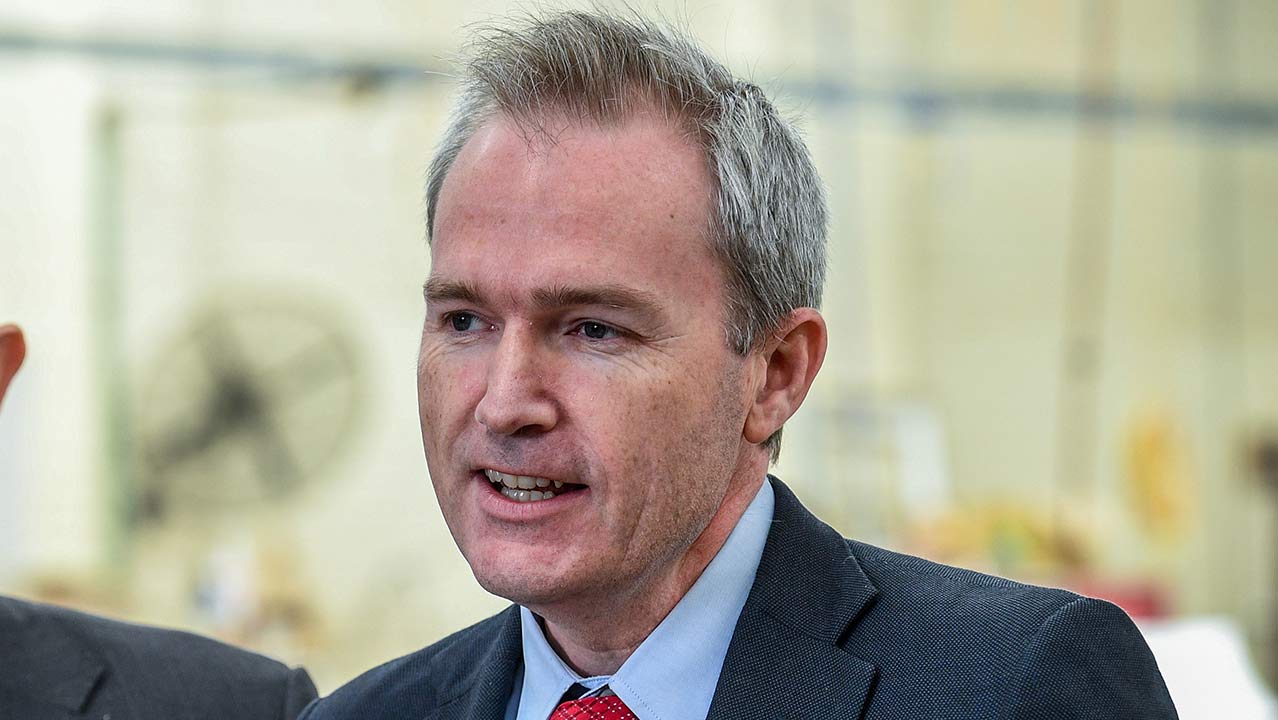
The Turnbull government was already working on visas to force migrants to stay in the bush for longer, but Scott Morrison may put his own twist on the plan By James Elton-Pym The Morrison government is expected to forge ahead with new skilled and family visas that force migrants to spend years in regional areas before they can move to a city like Sydney or Melbourne. The previous Turnbull government had long flagged new visas to “bind” migrants to the regions, with data from the Home Affairs department suggesting one in 10 who come under existing rural visas then move to a city within 18 months. New prime minister Scott Morrison is yet to comment on the visas, but his recent cabinet reshuffle suggests the policy could be tweaked or integrated in a broader population policy. The minister working on the visas was then-multiculturalism minister Alan Tudge, who has now been appointed to the new position of minister for cities and population in the reshaped Morrison cabinet. The Australian reported a proposal for visas that locked migrants into the regions for five years was due to go to cabinet before the Liberal leadership spill, but is yet to be considered by the new team. Mr Tudge's office would not comment on the matter. David Coleman has been appointed the new minister for immigration. His office told SBS News he was not yet in a position to comment on the policy either, having only just been sworn in. The move takes immigration policy out of the responsibilities of Home Affairs minister Peter Dutton, with the exception of the Border Force, and could see a shift in emphasis. Business lobby Ai Group said it hoped immigration would again be seen as an “economic portfolio”.
The business community reacted with anger when the Turnbull government revealed permanent migration – made up of skilled and family visas – had fallen to its lowest rate in 10 years. James Pearson, head of the Australian Chamber of Commerce and Industry, said the regions were “paying the price” for a failure of infrastructure planning in the capital cities. Australia already has a number of visa programs designed to bring migrants to the bush, including the Skilled Regional (887) and the Regional Sponsored Migration Scheme (187). But the schemes bring in relatively few migrants, despite the acute population decline and skills shortages in some regional areas. More than 90 per cent of permanent arrivals choose to settle in the big cities on Australia’s east coast. Moreover, there is little employers can do to stop migrants leaving for a city once their permanent residency has been granted. In the visa world, the “regions” normally include smaller cities like Adelaide, Darwin, Canberra and Hobart. The government reclassified Perth as a metropolis in November last year. Questions remain over how the government can force migrants to stay in the regions without running into legal disputes by restricting freedom of movement. Labor frontbencher Richard Marles questioned how the visas would function in practice. “I’m not sure that mandating new immigrants living in regional Australia is going to work,” Mr Marles told Sky News. “I’m not actually sure there is the power to put that in place, to actually mandate that they do live there,” he said. “So I am a little worried about the particular prescription they are putting in place to bring this about.” FOR FULL STORY PLEASE CLICK THE LINK BELOW: www.sbs.com.au/news/new-visa-could-keep-migrants-in-regional-australia

0 Comments
'Character requirements'
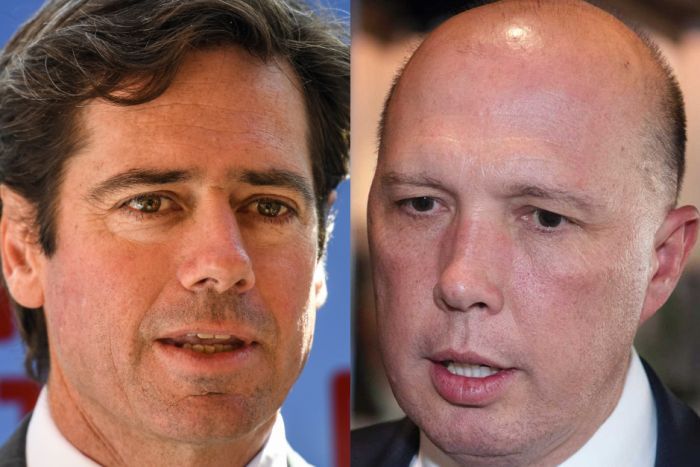
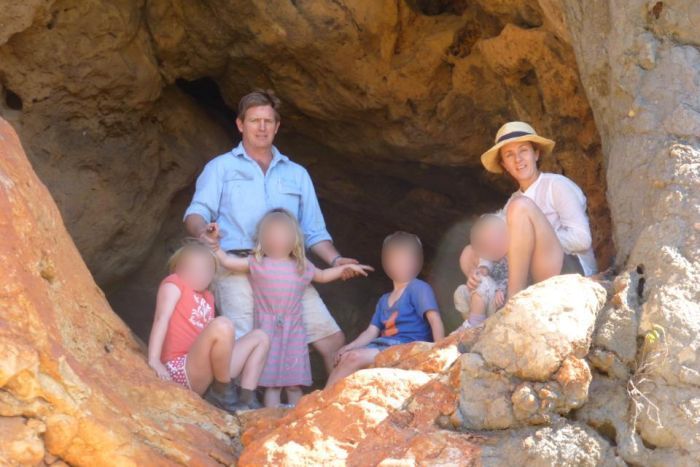
Section 501 of the Migration Act allows the Minister to deny anyone a visa if they do not pass "the character test". The Home Affairs Department would not comment on Ms Manning's case. A spokesman said all non-citizens need to meet certain character requirements before being granted entry to Australia. "A person can fail the character test for a number of reasons, including but not limited to where a non-citizen has a substantial criminal record or where their conduct represents a risk to the Australian community," the spokesman said. Ms Manning, a transgender woman, is also planning to speak in New Zealand, where the centre-right National Party is lobbying for her visa to be cancelled. She was banned entry to Canada in 2017, although she was permitted to speak at an event earlier this year. 'So far from a risk' Greg Barns, a lawyer for Wikileaks founder Julian Assange, said refusing her entry was extraordinary given her sentence had been commuted. "There have been in the past many people who've come to Australia with criminal records … and she should be no exception," Mr Barns. "I don't think anyone would seriously suggest Chelsea Manning while in Australia would be rummaging through the files of the Department of Foreign Affairs and Trade or Defence or the US Embassy. "Those provisions are really designed to be utilised in cases where there is a risk that a person may commit offences, is a risk to the Australian community, no one would seriously suggest that's the case here." Ms Jamil said Ms Manning was "so far from a risk to the Australian public". "In January 2017, the incumbent President Obama commuted Chelsea's sentence. That should be a consideration in this instance," Ms Jamil said. "We're still really positive about the whole situation and we want to do everything in our power that we legally can in order to provide the reasoning behind why Chelsea should be able to enter our country." In 2010, Ms Manning was sentenced to 35 years in prison for leaking more than 700,000 documents to WikiLeaks — the biggest breach of classified data in the history of the US — after being found guilty of espionage. The documents included more than 250,000 diplomatic cables rom US embassies, a "collateral murder" video of a US Apache helicopter which killed civilians in 2007 and confidential files related to 779 Guantanamo Bay detainees. During the case Ms Manning's defence argued she was not a traitor but rather a "young, naive and good-intentioned" citizen who wanted to encourage public debate. But the prosecution said she recklessly betrayed her uniform and country by leaking documents she knew Al Qaeda would see and use. She came out as transgender shortly after her sentencing, but the military denied her request for hormone therapy treatment while behind bars. FOR FULL STORY PLEASE CLICK THE LINK BELOW: www.abc.net.au/news/2018-08-29/chelsea-manning-australian-government-may-ban-entry/10180236 By political editor Andrew Probyn and political reporters Andrew Greene and Eliza BorrelloUpdated 46 minutes ago Home Affairs Minister Peter Dutton personally intervened to stop a French au pair being deported after his office was lobbied by AFL boss Gillon McLachlan. Documents obtained under Freedom of Information show Mr Dutton approved the release of a 27-year-old woman from immigration detention on November 1, 2015 and used his ministerial power to grant her a tourist visa. The ABC understands the woman's name is Alexandra Deuwel and that she arrived at Adelaide Airport on October 31, 2015. It is believed she was planning to work for Adelaide-based pastoralists Callum and Skye Maclachlan. Callum Maclachlan is the second-cousin of Gillon McLachlan, even though their surnames are spelled differently. Key points:
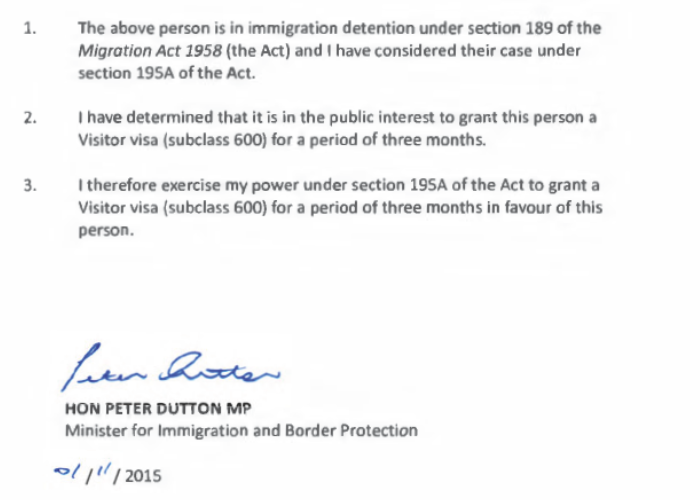
It is understood Gillon McLachlan made representations to Mr Dutton's chief of staff, Craig Maclachlan. It is not known whether Craig Maclachlan is a relative of either the AFL boss or the pastoralist. Mr Dutton's office asked the department for a brief on the matter. In a document marked 'Sensitive: Personal' dated November 1, 2015, Mr Dutton wrote, "It would be in the public interest" to grant the woman a three-month tourist visa. He added that his intervention was a "discretionary and humanitarian act" for someone with "ongoing needs" and that the decision was in the "interests of Australia as a humane and generous society". PHOTO: Alexandra Deuwel arrived in Australia on an eVisitor visa, which tourists can apply for online. (Supplied: Facebook) Mr Dutton approved Ms Deuwel's release despite her telling Australian Border Force (ABF) officers she intended to work in Australia. The documents show Mr Dutton was therefore warned there were "clear indications" Ms Deuwel was, "intending to work in Australia and thus, the grant of a visitor visa is of high risk". Mr Dutton was advised to impose a condition on Ms Deuwel that she must not "engage in work", which he did. It was not the first time the nanny had come into contact with border officials. The ABC understands she was "counselled" by ABF officers in May 2015 about breaching the conditions of her visa, as she left Australia. Ms Deuwel had arrived in Australia on an eVisitor visa, which tourists can apply for online. The ABC has sought comment from Mr Dutton, while Callum Maclachlan has not returned calls. The AFL declined to comment. FOR FULL STORY PLEASE CLICK THE LINK BELOW: www.abc.net.au/news/2018-08-28/dutton-released-au-pair-after-lobbying-from-afl-boss-mclachlan/10172788
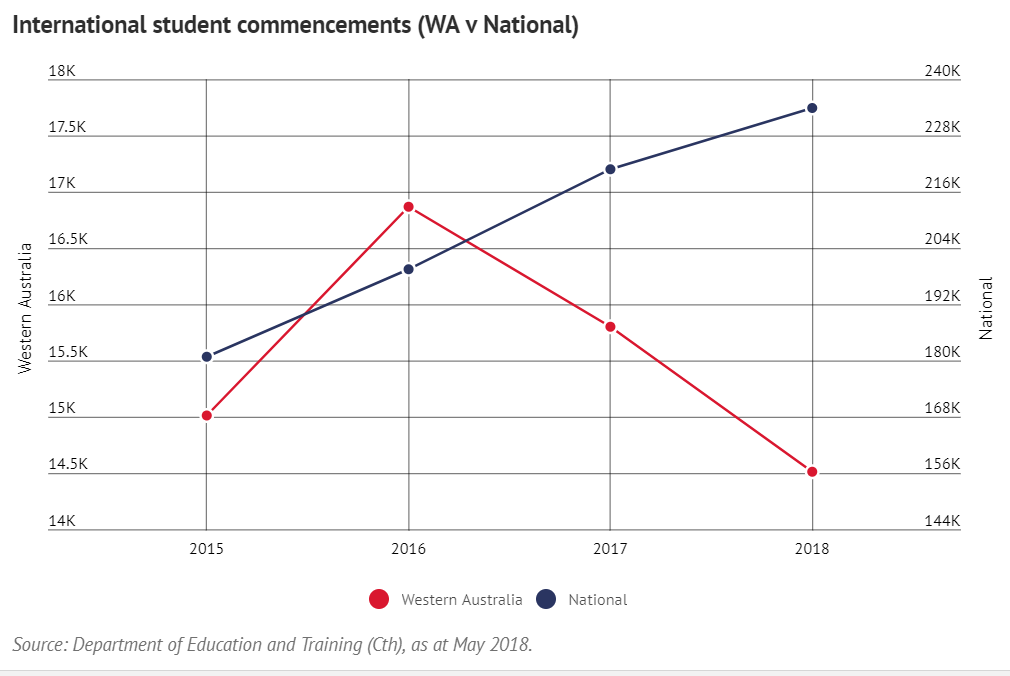
An additional Graduate Skilled Migration List will be introduced to attract the best global talent with the advanced qualifications, skills and experience and help grow Western Australia's share of the international education market. The McGowan Government will give high achieving education graduates - PhD, Masters, Honours and other higher degree graduates - a pathway to skilled migration. It is expected the changes will attract an increased number of high-quality international students to the State and help grow our share of the international education market. The State Government's existing Skilled Migration Occupation List will not be affected, with the policy of not including occupations such as bricklayers, electricians and mechanics remaining in place. Priority consideration for skilled migration under the State Nominated Migration Program will be granted to the best and brightest international students graduating from WA universities. These students are essential to maintaining the competitiveness of Western Australia's universities in creating knowledge and building capacity for scientific and technological development, and strengthening the future workforce. Information about eligibility and how to apply will be available on the Department of Training and Workforce Development's migration portal in coming months at http://www.migration.wa.gov.au The McGowan Government has also committed $2 million to develop a detailed and comprehensive International Education Strategy, which is expected to be announced later this year. Comments attributed to Premier Mark McGowan: "Attracting the best and brightest of international university students represents a major step in our commitment to increasing Western Australia's share of the international education market. "We need to send a message to the world that we welcome international students, and their friends and families. Perth is an attractive, supportive destination to live, study and work. "A key part of our Plan for Jobs includes an investment of $2 million to develop an International Education Strategy to grow and diversify the knowledge economy, while creating jobs." Comments attributed to Education and Training Minister Sue Ellery: "Encouraging international students to choose Western Australia as a destination for study and work will help boost our economy and create WA jobs. "We have excellent universities and our weather and lifestyle is second-to-none. "We're confident that investment in international education and our International Education Strategy will see growth in the sector." Premier's office - 6552 5000 Education and Training Minister's office - 6552 5700 A dramatic drop in the number of international students enrolling in WA could be costing the state hundreds of millions of dollars, according to the opposition. New figures released by the federal Department of Education revealed 8.2 per cent fewer overseas students commencing studies this year in WA, the only state to record a decline. The number of new international students climbed by 7.7 per cent in Victoria, 7 per cent in Queensland and 6.3 per cent in New South Wales. A row erupted in parliament on Thursday after the state government promised to introduce a pathway for high-achieving foreign graduates to migrate. The numbers of international students enrolling in WA have plummeted. Photo: Nic Walker Deputy opposition leader Liza Harvey said WA was missing out on international students choosing to move to the eastern states. "Western Australia has missed out on 2877 students because we have lost our share to the east coast, but we also have not been part of the growth internationally in this space. That is worth $959 million to the Western Australian community," she said. "It is affecting our economy, jobs and employment. It is also affecting our tourism figures, because for every student who does enrol at one of our universities, we lose five trips from their family every year. "It is no wonder our tourism figures are looking sick."
Shadow Tourism Minister Libby Mettam said the state government's decision to remove Perth from the regional sponsored migration scheme axed an important incentive for international students to come to WA. "Two weeks after coming to government, the first decisions of the McGowan government were to remove Perth from the regional sponsored migration scheme, thereby removing the incentive for students to study here, and to reduce the number of jobs on the state’s skills list from 178 to 18," she said. "That now means that WA has to compete against states like Queensland, which has 114 jobs on its skills list, and Tasmania, which has 161." Premier Mark McGowan said the government would spend $2 million on a strategy for attracting international students to WA in addition to introducing the migration list for higher degree graduates. "We need to send a message to the world that we welcome international students, and their friends and families," he said. Education Minister Sue Ellery told parliament the number of international students projected to migrate under the new scheme was "currently under negotiation with the Commonwealth Department of Home Affairs". She said the $2 million strategy would be released in coming months. Story Credit to link below: www.smh.com.au/politics/western-australia/overseas-students-skipping-wa-a-lost-opportunity-costing-us-millions-20180817-p4zy6r.html On the 12th August 2018 Immigration will be introducing the requirement for sponsoring employers to pay into a Skilling Australians Fund. This payment will make it yet more expensive for employers to sponsor overseas workers.
The levy will be payable by Australian employers who wish to sponsor overseas workers. The money raised will be used to fund vocational education and training for Australian workers. SAF replaces the ‘training benchmark requirements’ that employers had to meet previously. There will be no exemptions for the SAF levy, except for religious workers nominated under the Labour Agreement (LA) streams of the TSS or ENS visas. All other sponsors, including those who are party to a labour agreement, must also pay the SAF levy. What visas will it affect? The charges will apply to the following visa nominations:
How much will employers have to pay to the Skilling Australians Fund? Employer Nomination Scheme 186 (all streams) and Regional Sponsored Migration Stream 187 (all streams)
Temporary Skill Shortage Visa TSS (482)
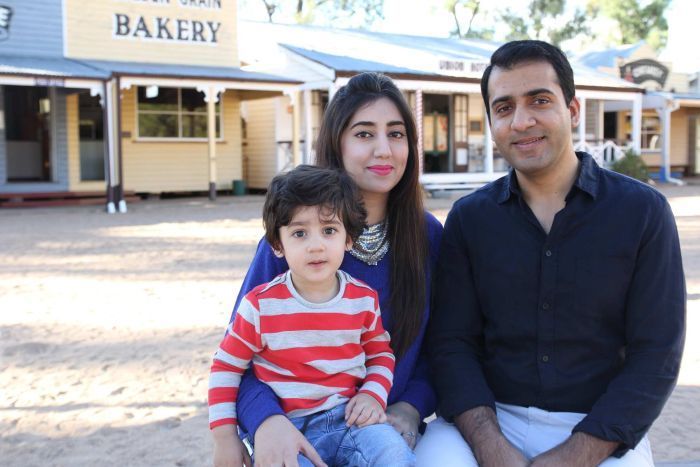
All payments will be payable in full at time of Nomination. Immigration has also announced a detailed refund policy for employers. For example, if the overseas workers leaves the position within 1 year and the approved period of the nomination was 2, 3 or 4 years, a partial refund may be provided as the employer did not obtain the benefit of the overseas worker for the nominated period. If you have any questions please do not hesitate to get in touch. Until next time! Andrew McAuley Visa Makers 0416 468 333 [email protected] By Cathy Jacobs "I'm not a visa number. I'm not a bunch of papers. I'm a person … and Queensland said hello." It was the first time Zita Stark had felt that way since immigrating from Hungary four years earlier. She was receiving a 2016 Queensland community service award for her volunteer work promoting cultural diversity in rural Australia. "It was the most important moment of my life," says Zita. In 2012, the former tax advisor left what she describes as a joyless existence in debt-ridden Hungary working up to 14 hours a day on low wages to survive. Up to 190,000 immigrants are admitted to Australia each year but unlike the majority, Zita did not settle in a major city. She found the life she'd hoped for in the agricultural and mining town of Chinchilla, 300km northwest of Brisbane. Four years ago, Zita saw a need to help the growing number of families from non-English speaking backgrounds who'd moved to the region during the coal seam gas construction boom. 'Remedy to isolation' She formed Conversations in English, a language support group which quickly evolved into much more than that. "They are highly educated people, but they were seeking connection and integration into the Australian community, to learn more and to share their own cultures," says Zita, who speaks several languages. While skilled immigrants who come for work may speak good English, this might not be the same for their spouses. "Quite a few people in town feel very isolated and they don't trust themselves to go out into the community. The hardest challenge for me is to find them and make them believe they can come along to the group," says Zita. "So it became more about giving remedy to isolation and somehow transforming the town into a multicultural hub." From Lahore to ChinchillaQueensland Gas Company engineer Osamah Mahmud moved from Lahore, Pakistan, in 2011. His wife Hena joined him in Chinchilla later, where their son Azlan was born. "I was very lonely," says Hena "My husband was working nine hours a day and I didn't know anybody. I was telling him that I'm stuck here with no friends and no life. "But then I met Zita who introduced me to the Conversations in English group and everyone welcomed me with open arms. "I wasn't sure how locals were going to react because I'm a Muslim from Pakistan but it was totally the opposite to what I had in my mind." Osamah admits that moving to a rural town was a culture shock, but the isolation is outweighed by the joy of living in a peaceful, close knit community. "I will always feel blessed to be part of this country, the rule of law, respect for the law and people looking out for each other," he says. Building bridges At its peak, Conversations in English operated in Chinchilla, Dalby, Miles and Tara, before the construction boom ended. Ray Brown, a Western Downs councillor for 29 years, has watched Chinchilla's population swell, shrink and then even out to about 6,500. "At one point, we were nationalising up to 100 people a month in citizenship ceremonies," says Mr Brown. "Our schools are booming but we found that 18 per cent of children were struggling with English." He credits initiatives like Conversations in English with improving community relations. "Zita is a phenomenal woman who is very well respected. "It started from nothing, but she is making a big difference in peoples' lives," he says. . Zita gives her time to visit immigrants in their homes to help with paperwork and academic assignments. As well as hosting weekly Conversations in English meetings and excursions, she helps with multicultural food events like Harmony Day and One Long Table. Rural towns are notoriously hard to break into. But Lisa Harth, who runs the Dalby branch of Conversations in English, says Zita's warmth has encouraged a cultural exchange that's enriched the community. "People are very shy when they first come along to the group, but it works so beautifully because Zita gets it," says Lisa. "She knows what it feels like and the support that she gives comes from a place of understanding." What's next for Zita?Zita is now waiting for her citizenship application to be processed. "I would love to fit in fully, to give more," she says. "I miss Hungary, I miss my mother, I miss the people. But I'm home. "Being a migrant, you always have two homes. You go home to visit where you were born and then you come back home to live your life." FOR FULL STORY PLEASE CLICK THE LINK BELOW: www.abc.net.au/news/2018-08-04/zita-stark-english-classes-in-chinchilla/10071084 |
Archives
July 2025
Author
Andrew EP McAuley Categories
All
|


RSS Feed