
|
PHOTO Gig workers are characterised as contractors rather than employees. FACEBOOK: FOODORA Some of the most vulnerable workers in the Australian labour market are squeezed between a rock and a hard place. "You can never do your homework, you are so tired and you just think about how to cook the next meal and sleeping. That is your life." This international student, also works as a food delivery worker. He's a gig worker, which means he uses an app to source his work. One of the reasons he does this is because of his visa restrictions. Missing the gig? The rise of the "gig economy", where workers are not engaged as traditional employees, may further threaten endangered trade unions. He's one of the 46 international students and working holiday worker visa holders we interviewed in our research, who were also working as food delivery workers.

The majority of these workers can't earn enough money to live without working extra hours. They can't work extra hours without breaching their visa. So our research found some turn to gig work as it's seen as a way around the current system. However, this choice leaves them exposed to the whims of digital platform companies that regularly reduce the terms and conditions of food delivery work. FOR FULL STORY PLEASE CLICK THE LINK BELOW: mobile.abc.net.au/news/2017-08-21/exploitation-or-visa-breach-the-choices-of-food-delivery-workers/8827744?pfmredir=sm

0 Comments
By Soraya Caicedo Melbourne-based Yessica Ramones, who is now an Australian citizen pictured with her Venezuelan mother during her 2015 visit (Supplied) "It is not uncommon for Venezuelans to overstay or apply for protection," is a response from the Immigration Department that has generated confusion and disappointment among Venezuelans, some of whom are now Australian citizens. Juan Pablo Alvarez and his family - who are Australian citizens of Venezuelan origin, were hoping to welcome his wife's family for a Christmas visit downunder from Venezuela, in December 2016.
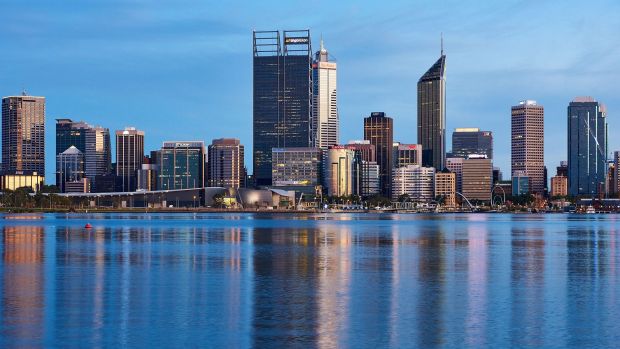
Alvarez 's parents had only recently returned back to Venezuela after spending three months with them had come to Australia to meet little Sofia. Christmas would have been the best opportunity for the other set of grandparents, but the answer received from the Department of Border Force and Immigration to their tourist visa applications left them speechless. Alvarez tells SBS Spanish that the response received by Mr Heber Garbi from the Australian embassy in Chile explained that his visa was denied even though the decision was not "a reflection of your financial capacity or professional and personal profile," but was due to the current situation in Venezuela." "I cannot be satisfied that you genuinely intend a temporary stay in Australia." Ongoing political and economic unrest in Venezuela, involving months of violent protests against President Nicolas Maduro, resulting in many deaths, appears to have far-reaching consequences for its people. For Alvarez meanwhile, to his surprise, the Immigration official in Chile said, "I cannot be satisfied that you genuinely intend a temporary stay in Australia." His parents-in-law have already visited Australia on several occasions and have never overstayed their visas - nor did they intend to do it this time. "My father-in-law [aged 71] has a farm in Venezuela where he produces agricultural products," says Alvarez. "He has plenty of reasons to go back to Venezuela and my mother in law has all her family there." He adds that they have no motives or intentions to even ask Australia for protection. "The only intention they have is to meet his one-year-old daughter." FOR FULL STORY, PLEASE CLICK THE LINK BELOW www.sbs.com.au/yourlanguage/spanish/en/article/2017/08/16/venezuelans-being-denied-australian-visas-due-countrys-volatile-situationhttp://www.sbs.com.au/yourlanguage/spanish/en/article/2017/08/16/venezuelans-being-denied-australian-visas-due-countrys-volatile-situation 7th best in the world. Photo: Stefan Gosatti The Economist's 'liveability' report is sold to corporations so they can decide on extra pay levels for executives who move abroad.
It recommends a percentage employees should get on top of their salary if they are asked to live in a city with a poor liveability ranking To find the rankings the report said "every city is assigned a rating of relative comfort for over 30 qualitative and quantitative factors across five broad categories: stability; healthcare; culture and environment; education; and infrastructure. "Each factor in a city is rated as acceptable, tolerable, uncomfortable, undesirable or intolerable." FOR FULL STORY, PLEASE CLICK THE LINK BELOW: www.watoday.com.au/wa-news/perth-beats-sydney-for-liveability-20170816-gxxdj7.html Dr Louise Kennedy has been refused a skilled migrant visa after not passing the English oral test despite being a native English speaker and holding two degrees. Source: SBS World News Dr Louise Kennedy, a native English speaking veterinarian who hails from Ireland and holds two degrees obtained in English, has been working in Australia for two years as an equine veterinarian.
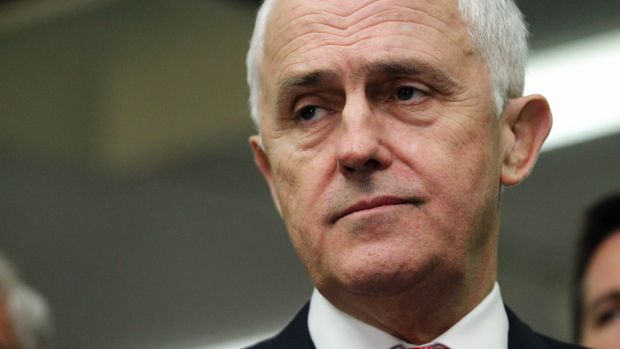
Earlier this year the pregnant mother, who's married to an Australian and lives on the Sunshine Coast, applied for a skilled migrant visa. The veterinarian profession is on the Australian Government's skilled occupation list. There's currently a shortage of equine vets, particularly in Queensland. But she says to her shock, she did not gain enough points in the English oral test component to obtain her visa. "It was such a shock," she told SBS World News. "It's the only exam I’ve ever gone into not being nervous about. “It's taken about two-and-a-half years to get to this point because as a vet you've also got to prove your skills as a vet, so I’ve done all of that – that takes about two years – and then to not get it from English is just so frustrating." FOR FULL STORY PLEASE CLICK THE LINK BELOW: www.sbs.com.au/news/article/2017/08/09/shocked-irish-vet-denied-visa-after-failing-oral-english-test By: Nassim Khadem Prime Minister Malcolm Turnbull in April flagged changes to the Citizenship Act and Migration Act, which is being examined by a Senate inquiry. Photo: AAPThe federal government's plans to tighten requirements to become an Australian citizen have been slammed by business groups who say their members are worried migrant workers awaiting permanent residency may leave Australia, rather than wait for citizenship. Prime Minister Malcolm Turnbull in April flagged changes to the Citizenship Act and Migration Act, which are being examined by a Senate inquiry. The draft legislation includes a number of proposals, including extending the wait for permanent residents to four years, instead of one, before they are eligible to apply for citizenship. It also proposes a new citizenship test and a pledge of allegiance to Australia and a requirement to display Australian values. Applicants will need a "competent" instead of "basic" proficiency in English. Although the legislation does not spell out what this is, Immigration Minister Peter Dutton has previously said English proficiency will equate to level six of the International English Language Testing System (IELTS). Government losing groundBut Diversity Council Australia's chief executive Lisa Annese said her business members were concerned that the extended permanent residency requirement would make Australia a less attractive business destination. Ms Annese said the retrospective nature of the proposed changes was "deeply unfair". Combined with the 457 visa changes, it had sent corporates "into a tail spin", since many of the nation's largest companies had skilled workers on major projects whose future was now in doubt. FOR FULL STORY PLEASE CLICK THE LINK BELOW: www.smh.com.au/business/workplace-relations/business-groups-slam-planned-changes-to-citizenship-20170807-gxqt6r.html |
Archives
July 2025
Author
Andrew EP McAuley Categories
All
|

RSS Feed